
3 hr
Athens Street Food Tasting Tour
Discover authentic Greek flavors on a 3-hour culinary walk through Athens' most delicious neighborhoods
Reserve
Hand-picked by our editors — only the best 5 experiences from 42 reviewed.
Verified partners for every tour, free cancellation where available, and instant confirmation on every booking.
3 hr
Discover authentic Greek flavors on a 3-hour culinary walk through Athens' most delicious neighborhoods
Reserve
4 hr
Discover authentic Greek flavors through markets, bakeries, and tavernas on this guided culinary walk
Reserve
3 hr 30 min
Savor authentic Athens through 8-10 tastings at specialty shops, markets, and traditional eateries
ReservePrices from verified partners. Availability updates in real time at checkout. Free cancellation policies apply where shown.
The landmarks, rooms, and views travelers on this tour remember — all visible on a single visit.
This historic central market has been the heartbeat of Athenian food culture since 1886. It features hundreds of stalls selling everything from local cheeses to fresh fish.
Famous for its aromatic spice shops, this street is essential for buying mountain tea and saffron. It provides a fragrant contrast to the busy meat markets.
This major thoroughfare connects Omonia and Monastiraki squares and serves as the main artery for the city markets. It is lined with shops showcasing local nuts and honey.
A spacious plaza near the city hall that often hosts exhibitions and local gatherings. It provides a peaceful respite from the density of the nearby food halls.
This pedestrian-friendly street is filled with cafes, shops, and historical landmarks. It is a perfect path for an authentic walking experience through central Athens.
They complement each other; most visitors who do both call the guided athens food tour on foot the more immersive experience for deep culinary context. Opting for a professional local gastronomy journey ensures you taste authentic ingredients while solo explorers value the privacy of their own pace.
| Feature | Top pick Athens Food Tour | Self-Guided Market Visit |
|---|---|---|
Curated Knowledge |
Expert guide narrative | Limited to personal research |
Hidden Gem Access |
Exclusive vendor introductions | Public market stalls only |
Cost |
Paid participation | 0 EUR |
Social Experience |
Group interaction | Independent exploration |
Flexibility |
Scheduled itinerary | Complete personal freedom |
Ease of Navigation |
Follows optimized route | Requires map proficiency |
| See tickets → |
Verdict: Choose the guided athens food tour on foot tours for narrative depth and efficiency, or pursue the DIY option if you prefer solitary exploration at your own speed.
Choose your ticket, select your date, and reserve in under two minutes. Secure checkout handled by our verified partner.
Instant confirmation by email, with a mobile voucher you can save offline. No printing, no queuing at a collection desk.
Arrive at the entrance, show your voucher on your phone, and walk in. Most tickets include priority or skip-the-line access.
Practical details for your visit straight from our verified partners — hours, access, rules, and how to get there.
Comfortable walking shoes are essential for your athens food tour on foot due to uneven market terrain. Modest clothing is recommended if visiting religious sites nearby.
Keep belongings secure in front-facing bags, as popular market areas can be crowded. Avoid bringing large luggage on an athens food tour on foot.
Photography is generally welcomed during an athens food tour on foot, though it is polite to ask vendors before taking close-up shots. Capture the vibrant colors of fresh produce and historic architecture.
While city streets are accessible, an athens food tour on foot involves navigating busy market stalls which may be difficult for mobility aids. Expect high sensory environments with loud, energetic vendor calls.
Families enjoy the educational aspect of an athens food tour on foot, where children can sample local fruit and traditional pastries. Use caution in crowded corridors of the food halls.
Your athens food tour on foot includes multiple tastings of authentic Greek delicacies like feta, olives, and fresh bread. Carry a refillable water bottle to stay hydrated while exploring the city.
Best time to go, insider tips, nearby landmarks, and the cancellation fine print — flip through to skim what matters to you.
Flexible, no hidden fees.
Full refunds are typically available for bookings cancelled at least 24 hours in advance. Entrance fee is 0 EUR as these tours operate on public streets and markets.
More than four million kilograms of produce pass through Athens' central markets each week, funneled from Aegean islands, Peloponnesian orchards, and Cretan olive groves into the cramped stalls of Varvakios and the pavement vendors of Evripidou Street. The city's food commerce has occupied the same triangle of streets since the Ottoman period, when spice merchants and fishmongers clustered near Monastiraki to serve both the Turkish garrison and the Greek neighborhoods spreading toward Omonia. Today that density persists in a five-block radius where sesame-crusted koulouri vendors work alongside third-generation butchers, and where the scent of roasting coffee from 1930s-era kafeneia mingles with brined olives displayed in plastic tubs. Athens food tour on foot itineraries thread through this compact geography, connecting points that would otherwise remain invisible to visitors navigating metro stations and archaeological perimeters. The routes trace supply chains: from the fishmongers' marble slabs at dawn to the midday grills of Psyrri, where sardines caught off Hydra that morning emerge charred and lemon-soaked. Guides steer groups past the tourist-facing tavernas of Plaka into working-class enclaves where a kilo of feta costs half the Syntagma price and where baklava is still brushed with butter, not margarine. These are not reconstructions or folklore performances but functioning retail ecologies, preserved by economic necessity and neighborhood loyalty rather than by municipal decree. The value of a walking food tour in Athens lies in access and translation. A visitor lacks the context to distinguish between a tourist-facing gyro stand charging six euros for pre-formed meat and a family operation in Metaxourgio serving hand-cut pork from a spit turned since 1974. Language barriers compound the problem: menu boards remain in Greek, and the distinction between horiatiki and politiki salad, or between graviera and kasseri cheese, goes unexplained. Guides function as linguistic and cultural intermediaries, negotiating tastings at stalls that lack English menus, identifying which bakeries still make their own phyllo by hand, and explaining why Athenians eat dinner after ten but drink coffee at all hours. The structure transforms a generic walk into a curated sequence, replacing guesswork with informed selection across fifteen or more tasting stops spanning savory pies, cured meats, dessert pastries, and natural wines sourced from small Peloponnesian vineyards.
"More than four million kilograms of produce pass through Athens' central markets each week, funneled from Aegean islands, Peloponnesian orchards, and Cretan olive groves."
A step-by-step walkthrough of the visit — what you'll see, how long each stage takes, and the details that matter.
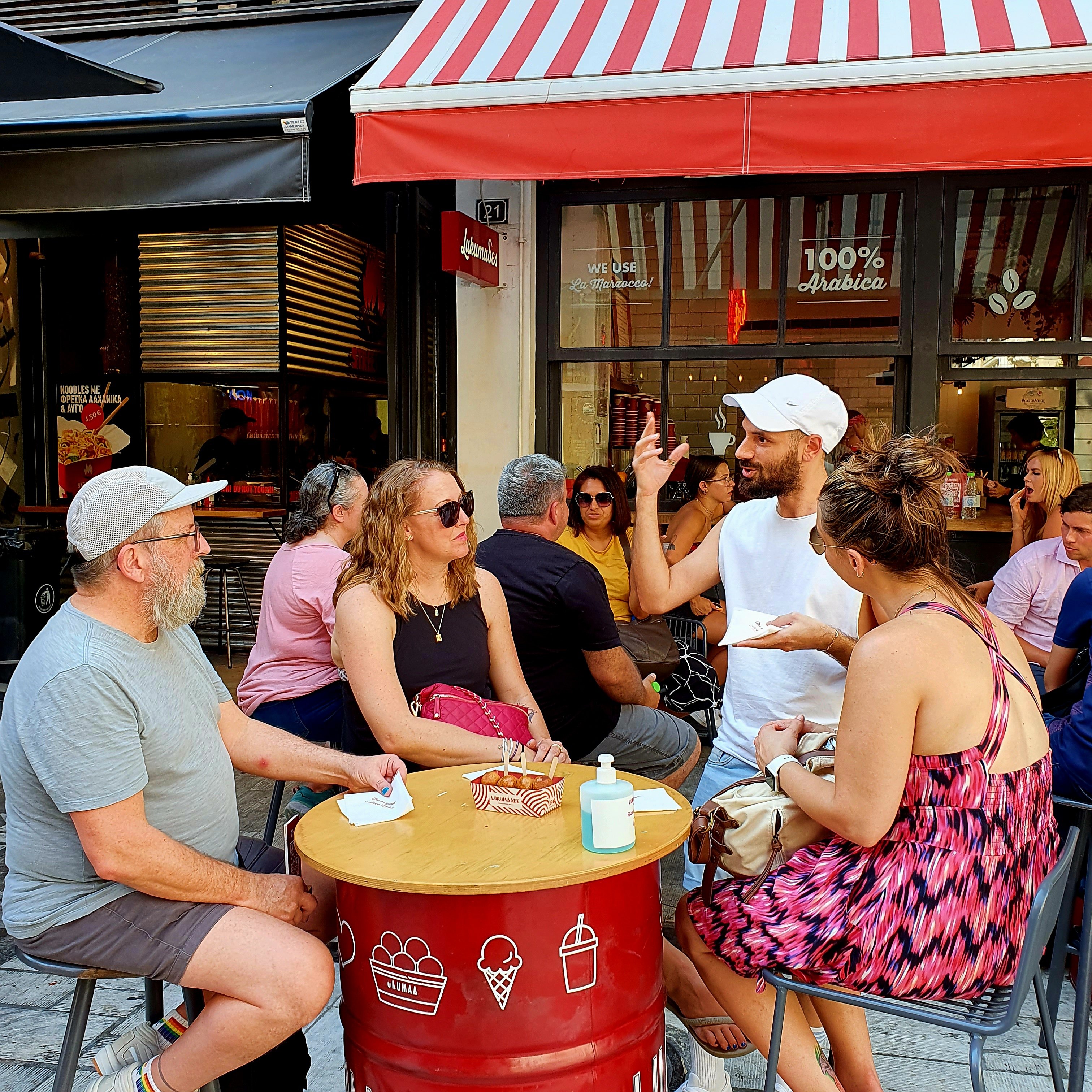
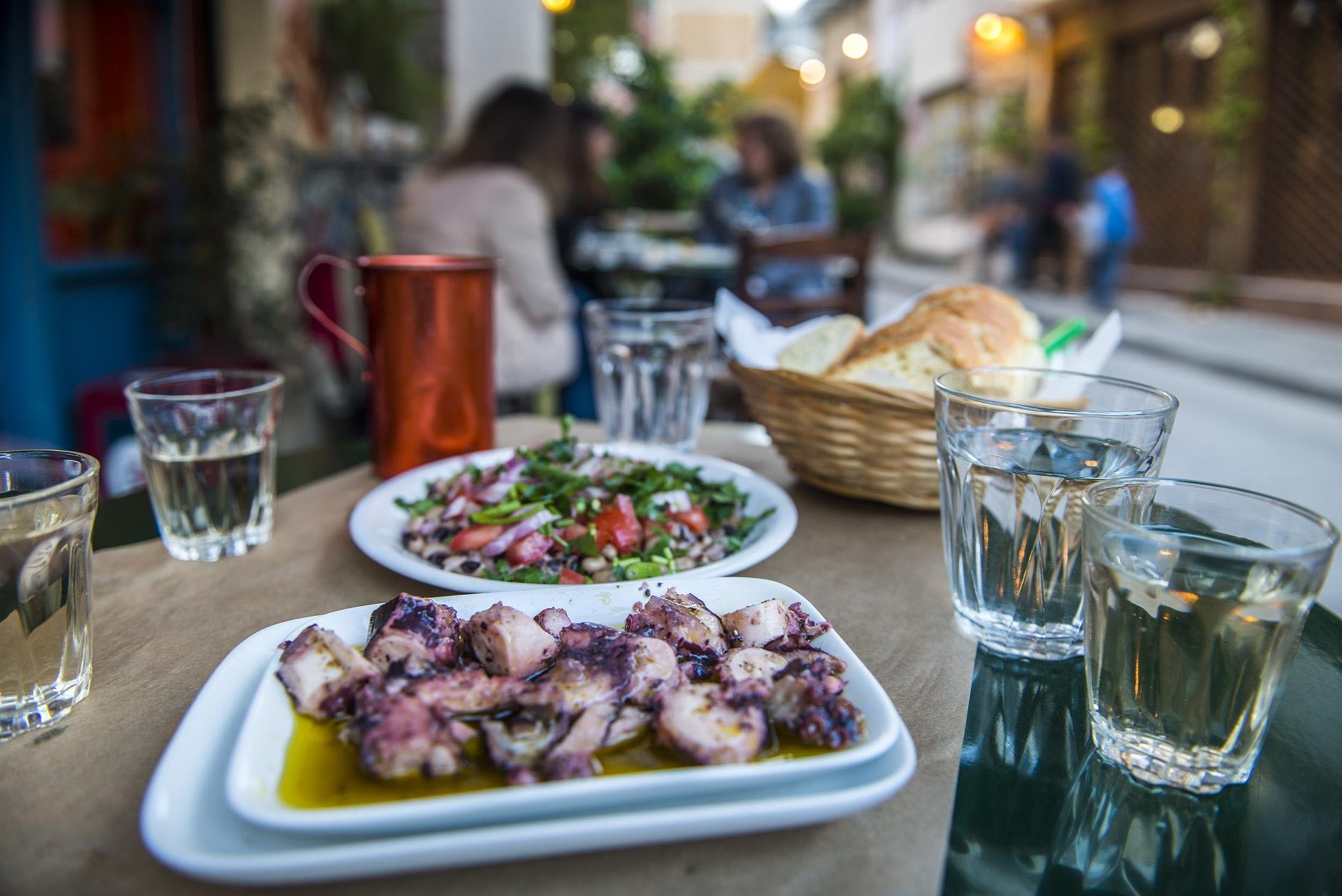
You meet your guide in Monastiraki Square at nine in the morning, before the heat settles and before the market crowds thicken. The first stop is a koulouri cart where sesame rings emerge warm from a portable oven, paired with a small cup of Greek coffee strong enough to coat your teeth. You walk east into Varvakios, the covered meat and fish market, where your guide explains the cuts of lamb hanging from hooks and points out the difference between farmed and wild-caught octopus laid out on ice. You pause at a cheese vendor's stall to taste three varieties of feta, each from a different region, and learn why the creamier Dodoni style differs from the crumbly Epirus blocks. The route continues into Psyrri, where you stop at a family-run souvlaki shop operating since the 1970s. You watch pork shoulder sliced from a vertical spit and wrapped in pita with tomato, onion, and tzatziki made that morning. Two blocks later, you enter a bakery specializing in bougatsa, custard-filled phyllo dusted with cinnamon and powdered sugar, still hot from the oven. The tour concludes in a small taverna near Omonia, where your guide orders a shared meze spread: grilled sardines, fried zucchini fritters, gigantes beans in tomato sauce, and a carafe of house wine. You sit for thirty minutes, the longest pause in a three-hour walk, and realize you have covered less than two kilometers but tasted a dozen distinct preparations.
An athens food tour on foot requires walking on urban surfaces; please check specific tour descriptions for duration and pace.
Walking tours take place on public streets and markets, so skip-the-line athens food tour on foot tickets are not required as there is no entry gate.
The best arrival window for your athens food tour on foot is 09:00–12:00 to experience markets at their peak.
The entrance fee is 0 EUR for an athens food tour on foot since you are exploring public markets and streets.
Families are welcome on most walking tours, but consider the distance of the athens food tour on foot before booking.
Wear comfortable footwear for your athens food tour on foot, as you will be navigating historic city streets.
Most tours depart from central locations accessible by metro; check your booking confirmation for your athens food tour on foot meeting point.
Yes, documenting your athens food tour on foot is encouraged, provided you respect local vendors and fellow travelers.
Cancellations for an athens food tour on foot are generally processed 24 hours prior; refer to your operator policy for specifics.